By Paul Williams, ABBA Breed Development Officer
Selecting a Brahman bull is one of the most significant investments a cattle producer will make. A single sire can influence the direction of a herd for a decade or more, and his genetic contribution will be reflected in every calf he produces. For northern Australian operations, where environmental pressures are extreme, cattle must perform under heat, parasites, long walking distances, and fluctuating nutrition, choosing a bull that meets the breed’s phenotypic standards is essential. These standards are not simply aesthetic ideals; they are practical indicators of functionality, fertility, and long term productivity.
A quality Brahman bull should display strong Bos indicus breed character combined with structural balance and functional design. These traits are not simply aesthetic preferences; they are the foundation of the breed’s ability to thrive in northern Australia. Heat tolerance, tick and parasite resistance, and the capacity to walk long distances across extensive country are essential attributes. A bull that can maintain condition on low quality forage, withstand nutritional stress, and continue to work effectively in harsh environments will pass these advantages on to its calves, ensuring long term herd resilience.
Head and Breed Traits:
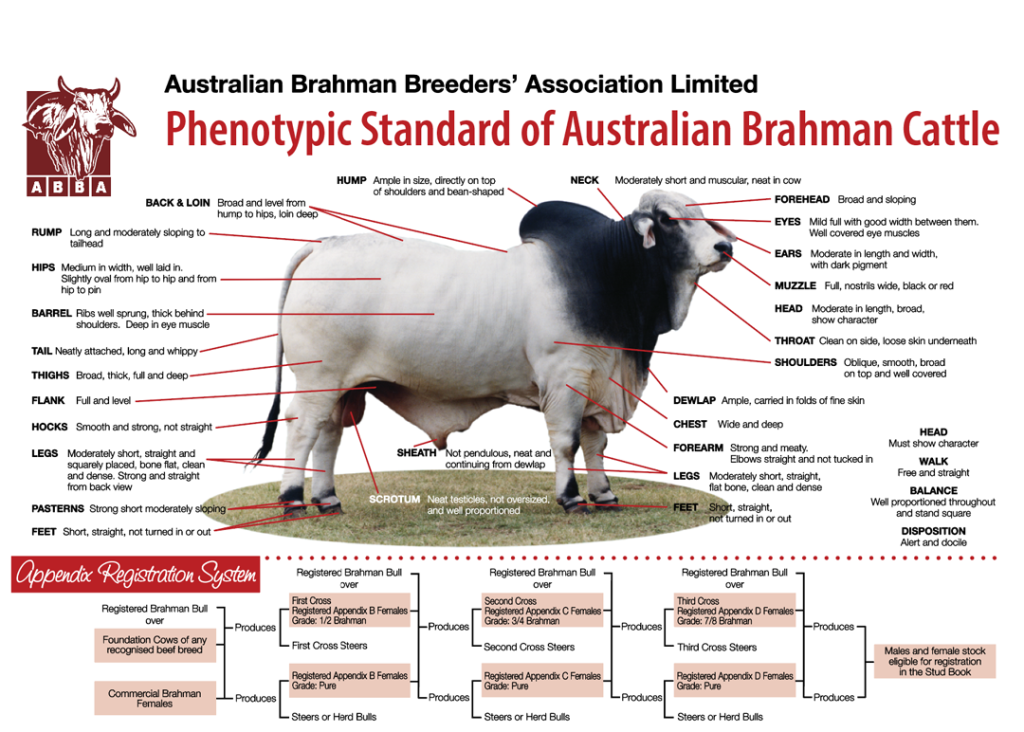
The head of the bull is often the first indicator of type and functionality. A broad forehead, medium to large drooping ears, and a slightly dished facial profile reflect true Brahman character and signal genetic purity. Loose skin around the throat and dewlap helps dissipate heat, allowing the bull to regulate body temperature more efficiently in northern climates. A strong, masculine presence is also important, as it reflects maturity, hormonal strength, and working ability. Bulls with narrow muzzles, coarse heads, or weak breed character often lack the balance and efficiency expected of the breed, and these traits can be passed on to their calves.
Hump, Skin, and Pigmentation:
The hump and skin characteristics also play an important role in environmental adaptation. A well developed hump over the shoulders, particularly in bulls, is a hallmark of Brahman cattle. Loose, pliable skin and a tidy, functional sheath contribute to heat tolerance and overall durability. Dark pigmentation around the eyes, muzzle, and skin is highly desirable, offering natural protection against sun damage and reducing the risk of eye cancer in bright northern conditions.
Structural Soundness:
Structural soundness is one of the most critical considerations for any bull buyer. A bull must be able to travel, serve cows, and remain productive for many seasons. A strong topline, correct shoulder angle, and sound feet and legs allow him to move freely and efficiently. Good heel depth and strong pasterns support longevity and reduce the risk of breakdowns. Bulls with poor foot angle, weak hind leg structure, or restricted movement often struggle under heavy mating loads, leading to reduced fertility and shorter working life.
Muscling and Body Capacity:
Muscle and body capacity should be assessed with practicality in mind. A functional Brahman bull displays adequate muscling without excessive coarseness. He should carry natural thickness, body depth, and length, with good capacity through the rib and flank. A smooth, even muscle pattern indicates softness and adaptability. Overly heavy muscling can compromise fertility, while narrow or shallow-bodied bulls often lack doing ability and efficiency, particularly in tougher seasons.
Fertility:
Fertility remains the economic cornerstone of bull selection. A bull must demonstrate adequate scrotal circumference, well formed testes, and strong libido. Scrotal size is closely linked to earlier puberty and improved fertility in daughters, making it a highly valuable trait for herd improvement. Fertility is also closely tied to structural correctness; a bull that cannot walk freely or withstand workload pressures will not perform to expectation, regardless of pedigree or appearance.
Phenotype + Genetics:
Today’s most successful bull buyers combine visual assessment with solid genetic information. While structure, temperament, and breed character remain essential, buyers also look for bulls backed by reliable data on growth, fertility, carcass traits, and maternal performance. A bull must not only present well, but he must also carry the genetic strength to move a herd forward. Blending visual appraisal with proven genetic indicators ensures buyers select bulls that deliver both structural correctness and measurable productivity.
In the end, the ideal Brahman bull blends structural soundness, fertility, breed character, and environmental adaptation with strong genetic credentials. By choosing bulls that show the qualities they’re aiming for, producers can build herds that are more productive, more resilient, and a stronger fit for their operation. A well chosen bull is not just a purchase; it is an investment in the future of the herd and the profitability of the entire operation.