By Linda Mantova, photos by Th3rd Dimension Media

Ken Muller believes in treating his cattle like athletes.
“Feed them well, look after them and they will perform to their best,” he says.
Having grown up with Brahmans his whole life, Mr Muller is very passionate about the breed.
“They excite me, and it’s a lot of fun. Everyday I go mustering I want to see what’s in the paddock,” he said.

He and his wife, Jennifer, in partnership with his brother, Larry and wife, Lyn, are the proud owners of Pluto Pastoral, at Proserpine, which was started by his grandparents, Ron and Mary Muller back around 1950, and carried on by his late parents, Ron and Carmel.
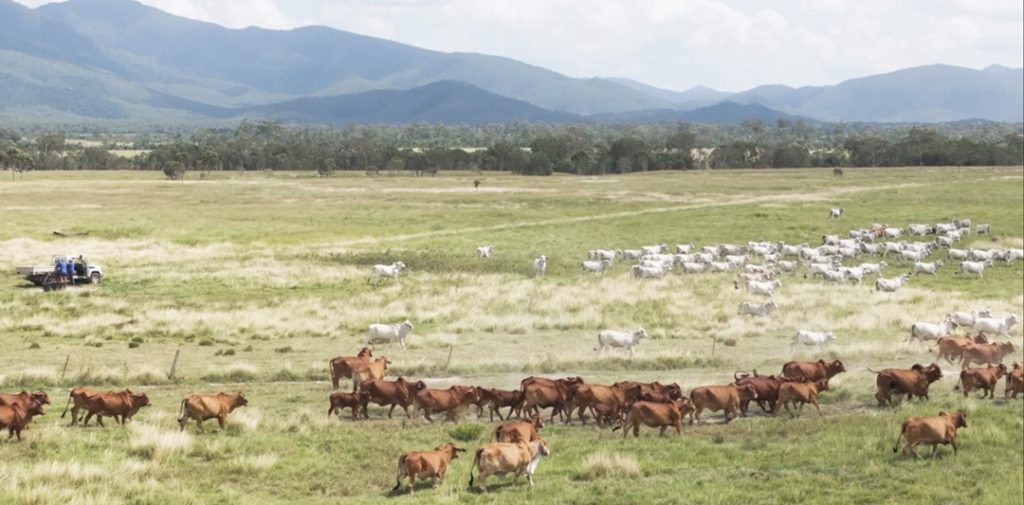
It continues today as a fourth generation family-run property, and consists of a 4500-head pure Brahman breeding herd as well as 500 Brahman-infused females, both red and grey, run over two properties in North Queensland totalling 27,000 hectares.
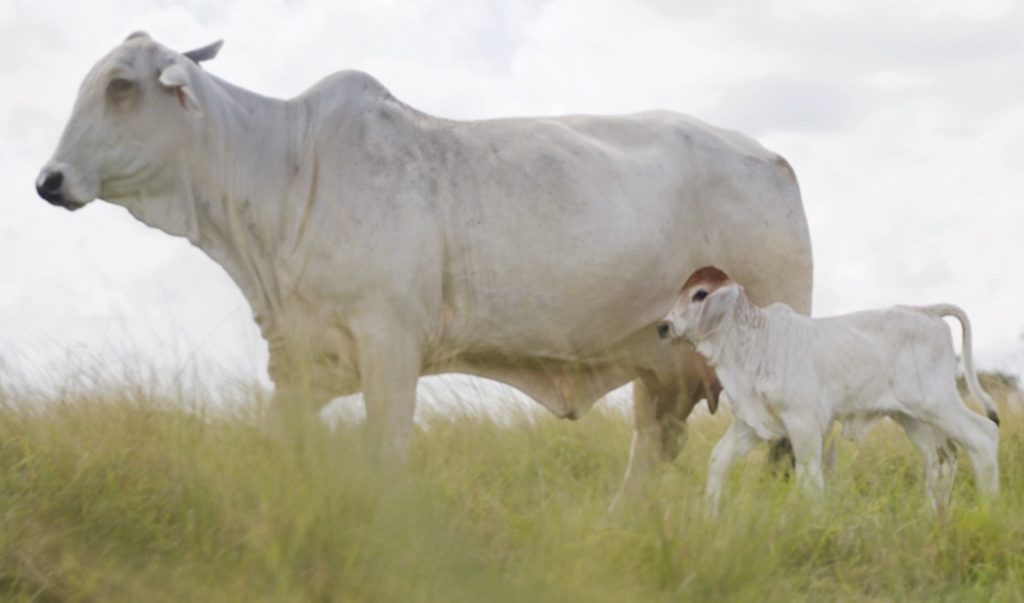
Mr Muller said Mt Pluto Station was their home place at Proserpine, consisting of 7000ha of freehold land, where they had their breeding country and home to a 2000-head predominantly grey herd.
He recalled the early days of the property, when his father took over Mt Pluto.
“It was all based on dairy cattle, and they had a dairy herd before. Our father, Snow Muller, used to milk about 70 or 80 cows and deliver the milk into Proserpine which was eight miles away on a horse and buggy and then come back and go to school,” he said.
“We started breeding and buying the first full blood Brahman bulls in 1959, and our first calves were branded in ‘61.
“I didn’t remember that first lot, but over the next couple of years, I was old enough to see these little calves come along, out of dairy type cows with little humps on their neck, and I thought it was pretty wonderful.
“They were pure bred full blood bulls from Wairuna stud at Nebo and Burnside stud at Ingham, so they had a fair bit of grunt in them and you could certainly see a difference as the herd developed.
“As time went on, we got the benefit of those close to F1s and it went on from there. Every generation from there was an improvement.”

Running their cattle on grasslands now, Mr Muller said originally the Proserpine property was full of tea trees and couldn’t run cattle economically.
“We were putting out lick all the time, but now we don’t put out lick, unless the season is really bad,” he said.
“We tried to keep costs down, so we got rid of some trees and put in pastures.
“It has taken years and years to get us where we are.”
Mr Muller paid tribute to the late Jeff McCamley, of Lancefield stud, who he said was a tremendous influence on him.
“He was one hell of a great man, as he got out there and looked, and he could see what adaptations needed to be done, and he did it.
“But my grandfather was also an extremely good cattleman. He started the whole deal and had the foresight. When he died in 1981, that’s when I met Jeff McCamley, and he became my idol. Whatever Jeff said I took it as gospel and as 100 percent accurate.”

Running another 2000 head of pure grey and red Brahmans, at their 20,000ha Richmond property, Patroy, which they purchased in 1976, Mr Muller said numbers could vary depending on the season.
“I don’t like to count the calves until they’re weaned, and they become an individual, but that’s about what we run,” he said.
“We mainly run our cross-bred females out at Richmond because it’s tick free out there.
“We have about a 60 percent calving rate at Proserpine, but that’s just the coast. If you want to have the Great Barrier Reef at your doorstep, you’ve got to tolerate that.
“However we have a 95 percent calving rate at Richmond, using exactly the same genetics, as it’s just the nutrition in the country that makes the difference.”
Mr Muller said they had structured their program to meet demand.
“We send our weaner steers and heifers from here out to Richmond, and they’re looked after by our manager, Terry Carrington,” he said.
“He looks after them for a week in a weaning lane with weaning paddocks around the yard. They are tailed in and out all the time, as temperament is most important for the young cattle.
“When you live 850 kilometres away, you’ve got to have something working for you, not against you. The cattle are quiet here, but Terry basically trains them to work off his Kelpie/Collie-cross dogs.
However, we don’t really need the dogs a great deal the way we’ve got it fenced and programmed.”
Mr Muller said they had undertaken a lot of improvements on their Richmond property, including fencing into 25 paddocks, and running 70 kilometres of poly pipe to watering points.
“We laid the lot – no contractors. It is fenced into 2000 acre paddocks, and there is a couple of sets of yards to make life easier,” he said.
“Brahmans were, in the early days, hard to clear because of the ticks, but since time’s gone on, it’s become better and better with better products, and the Brahmans have done well.
“We used to breed four-year-old bullocks out there once upon a time, but market demand has changed, so we are now breeding 24-30 month old steers, and believe it or not, we’re getting almost the same weight as we did with the four-year-old bullocks.
Utilising Thomas Borthwick and Sons at Baker’s Creek near Mackay for their processing, Mr Muller said they liked to get all their cattle killed in Australia.
“We want to create employment. If they go on a boat there’s not too much employment for Australians.”
Pluto Pastoral send about 1000 head to the meatworks annually.
“That’s steers, heifers and cows. The steers average around that 350 kilograms, and heifers with two to four teeth last year averaged 290kg,” Mr Muller said.
“There is a lot of preparation for the results that we’re achieving and it starts here at Pluto with quiet cattle.
“When it gets dry out at Richmond, we feed a supplementary molasses lick from Williams Stockfeeds. That keeps the cattle quiet and progressing, and we don’t need to work them for basically two years until we want to sell them.”

Another progressive step for Pluto Pastoral is their pursuit of MSA grading.
Mr Muller said they had been advised on what to do to achieve that.
“We get them in two days before they’ve got to travel. They are in the yard with very good Rhodes grass hay, good clean water troughs, and it’s not congested. For two days they’re settled, and then they’ll just walk on the trucks and go down to Mackay.
“Their first test is their pH, and if the cattle are stirry, their pH level goes up and they will not go into the chiller for the grading system. That’s why they are put in the yards for two days prior to their MSA grading.
“We have been fortunate enough that with all pure Brahmans, we’ve been getting a minimum 95 percent plus MSA grading with the preparation that we have been doing.
“And it’s all Brahmans – you just need quiet cattle. They’ve got to have good feet and legs as well, as they’ve got to cover some miles.”
With respect to the old breeding cows, Mr Muller said he didn’t place much emphasis on age, but rather on “structural soundness and fertility”.
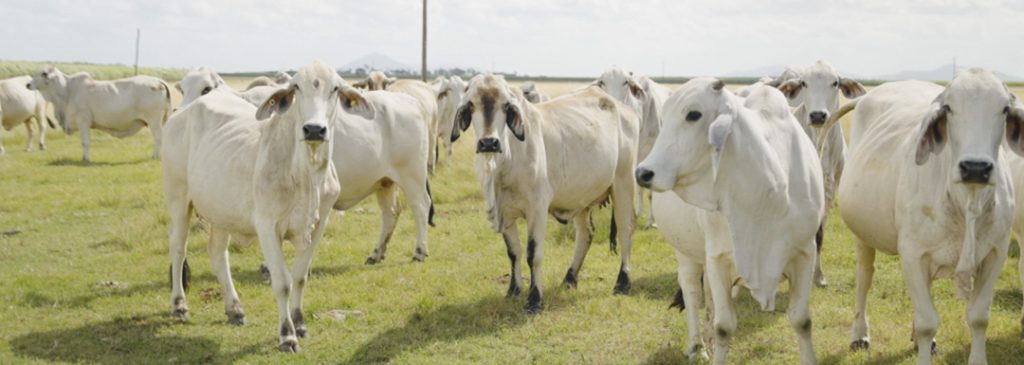
“Our cows are not monster cows. They’re moderate type cows that pack on a fair bit of meat. They are not real heavy, but they all get culled in August, and not on age definitely, but on temperament, if they’ve been missed earlier,” he said.
“They are also culled on feet, legs, udder – all those sorts of basic things. Some should have been done early, but hey, we’re not geniuses – we can’t get them right all the time.
“The ones that calve go into separate paddocks, and if they calve out they are kept until next year. The ones that don’t calve go to the meatworks, it’s pretty simple.”
Mr Muller said his red Brahmans were more resistant to ticks due to their pigmentation.
“However having used grey bulls now which have got pigment, they also seem to be better with ticks. We haven’t got ticks, too much, but you’ve got to keep on to that, or else it’ll come back and bite you.
“The red ones have been very good for us over the years. I’m not saying reds are better – I’m just saying our reds are better.”
Utilising many different sires over his cross-bred Richmond herd, Mr Muller said he had Charolais, Simmental, Charbrays, and Brangus bulls this year.
“They are all good cattle. If you are going to try something different, try a good one, or else you will be disappointed. If you try a good one and it doesn’t work, well you know it won’t work,” he said.
“We just like bullocks, and we just like fattening. We like our cattle to become the best they possibly can.
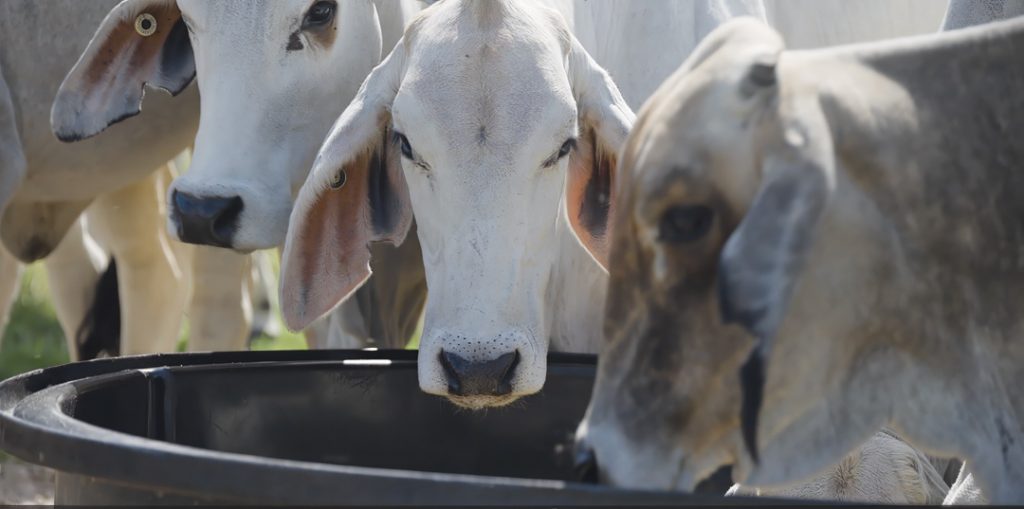
“It’s like an athlete, they want to be the best they possibly can without any defective elements. And we just like our cattle, our bullocks and cows, to do that with the genetics we put into them, and give them the opportunity to perform.
“With drought, if we’ve got to sell cattle, for feeders or overseas or whatever the case, then so be it.
“You really just have to adapt, especially on the coast to manage what’s in front of you. You can’t sugarcoat anything, you just have to try and deliver with the goal being to maintain and hopefully improve on what you already have.
“God bless Brahmans.”